
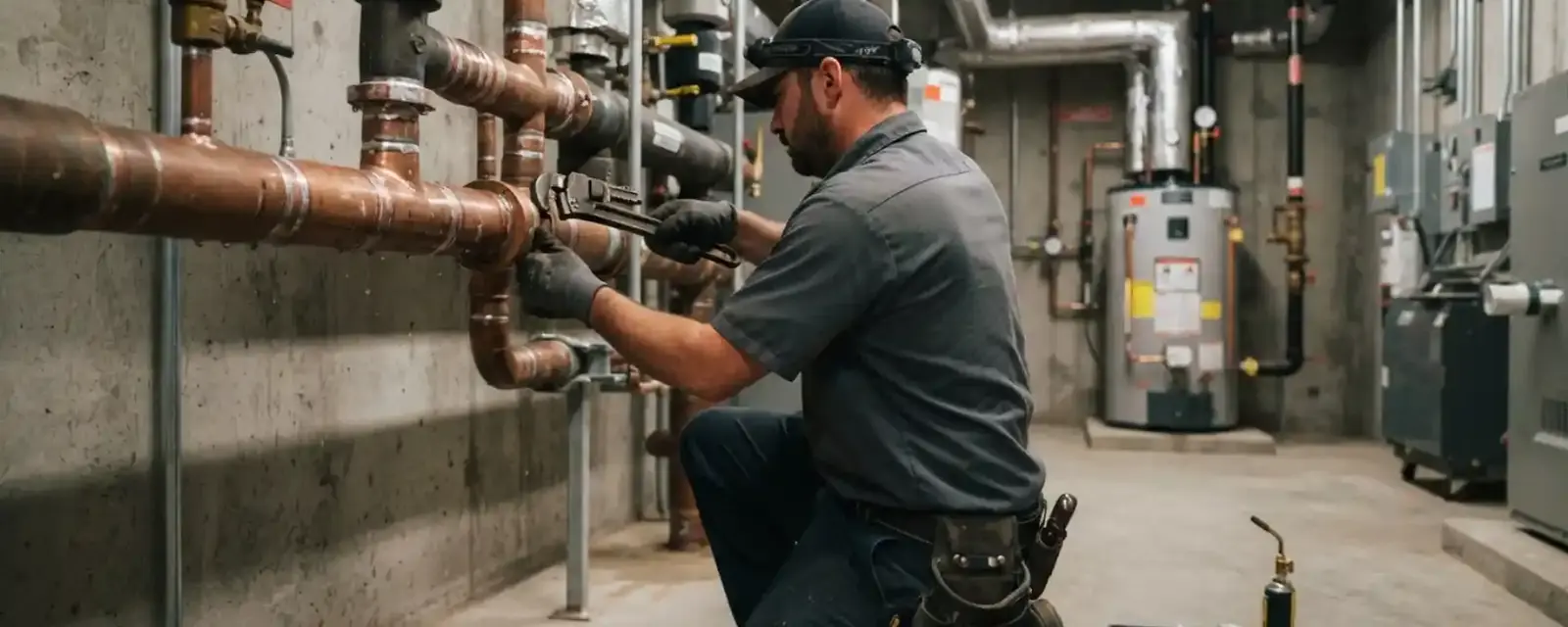
A business cannot close for a plumbing problem the way a house can. Commercial plumbing in Chesterfield, MO means a floor drain overflowing in a kitchen at closing time, a ceiling leak over inventory, or a restroom that has to be shut down before opening. If this is happening now, close the nearest shutoff, keep people away from the wet area and call our 24/7 line.
Property managers, landlords and tenants all call us, and each of them wants to know who is responsible and what happens next. We explain what we see, what it will take and what we would put in writing before work begins.
When a business plumbing problem is an emergency
Water on a commercial floor is a safety and liability problem, not only a repair. Standing water makes slips likely, and wet carpet and drywall can grow mold in a couple of days. A backed-up floor drain in a food area can also close a kitchen for the night.
We take after-hours calls on the 24/7 line and book same-day appointments when available. The first call should tell us what the water is, where it is coming from and where the shutoffs are.
- 1Shut off the nearest fixture valve, or the building main if you cannot tell where the water starts.
- 2Keep people out of the wet area and put out wet floor signs.
- 3Move stock, electronics and paper records away from the water, if it is safe to do so.
- 4If wiring or equipment is in the water, stay clear and call the electrician or utility.
- 5Photograph the damage for the owner and the insurance claim, then call us.
Problems that bring businesses to the phone
Floor drains that overflow
Floor drains in kitchens, mechanical rooms and garages back up when grease, debris or a blocked branch line stops flow. Water arriving from a drain after rain suggests a different issue than one that backs up after a busy lunch.
Hidden leaks
A rising water bill, a stained ceiling tile or a damp slab can mean a supply leak. Finding the exact spot saves cutting extra holes.
Restroom failures
Flushometer valves, clogged mains and leaking urinals shut down fixtures at the worst moments.
Grease trap and interceptor trouble
Slow drains, odors and overflow near kitchens often trace to a full trap.
Backflow device questions
Testing, failed assemblies and notices from the water provider come on a schedule that is rarely convenient.
Leak detection for a building, and what it can and cannot do
Detection starts with the water meter. If the meter keeps moving after every fixture is shut off, water is leaking somewhere. A moisture meter, thermal imaging, an acoustic listening device and a pressure test on isolated branches narrow it down.
Honestly, these tools tell us where a leak probably is, not always what is wrong with it. A large building with several risers, a slab and multiple tenants can take more than one visit, and some leaks sit under flooring where finding them means opening a floor.
We tell you when the evidence is thin, and we do not suggest cutting concrete on a hunch. For the same process at a smaller scale, see our leak detection service.
Business drain or leak down?
Tell the dispatcher the building type and how many fixtures are affected.
Drain overflows in commercial buildings
Where the backup shows up helps us find where the blockage sits. Branch clogs are a job for drain cleaning, and a blocked main may need sewer line cleaning.
| What you see | Likely location of the blockage | Next step |
|---|---|---|
| One floor drain overflowing | Branch line serving that drain | Cable or jet the branch. |
| Several drains backing up together | Main line downstream of all of them | Camera inspection and main line cleaning. |
| Kitchen drains slow with a sour smell | Grease trap or grease-coated line | Pump the trap and flush the line. |
| Restroom fixtures bubbling when others flush | Venting or blocked main | Check roof vents and clear the main. |
| Water at a floor drain after heavy rain | Stormwater or groundwater infiltration | Camera inspection and a look at the drainage. |
A commercial building often has long runs and large pipe, so a quick fix that works on a house sink may not work here.
Grease trap cleaning for restaurants and food service
A grease trap catches fats and oils before they reach the sewer. When the trap fills, grease reaches the line, builds up and causes overflow. Cleaning means pumping out the contents and scraping the baffles and walls.
How often depends on volume, menu and trap size. A busy fryer-heavy kitchen needs service far more often than a small café. Ask the City or your landlord whether your property has a required cleaning schedule, since it is set locally.
We also take trap and drain calls from businesses in Ballwin along Manchester Road.
Chesterfield Valley and large buildings
Chesterfield Valley, once called Gumbo Flats, is low-lying Missouri River floodplain that was farmland before it became office and retail. Chesterfield Commons and other retail in the Valley are typical of that growth, though we do not name any business as a customer. Large buildings there often have big drains, grease interceptors and backflow devices, and their size makes a lingering leak or a blocked main more expensive.
Since the Valley sits low, ask your property manager about sump pumps and floor drain backflow before heavy rain.
Backflow testing is planned work
A backflow preventer keeps dirty water from flowing back into the drinking supply. Many commercial properties have them on fire lines, irrigation and the main water service. Testing rules, schedules and approved testers come from the property's water utility or the City, so ask them what your property needs.
We can inspect and test assemblies where the rules allow it and repair a failed device. Whatever the rules say, a failed test is something to fix soon, and we explain what was found and the options before we start.
Who calls us: owner, manager or tenant
Property manager or landlord
- Controls access, shutoffs and approvals
- Wants a written explanation of cause and fix
- Often needs to coordinate several tenants
- Decides repair or replacement of building systems
Tenant
- Can report the problem and shut off local valves
- May need landlord approval for the repair
- Should photograph and report in writing
- Should check the lease for who pays
What drives commercial plumbing costs
A single toilet and a multi-tenant main are very different jobs, so we describe the work and price it before we start.
Commercial property policies often cover sudden accidental damage but not maintenance and wear, so review yours and ask the owner.
Want the real number for your job? Call the 24/7 line, describe the work, and hear a clear price before anything starts.
How a commercial service call goes
Phone triage
We ask what is leaking, how the building is used and where the shutoffs are.
On-site check
We find the source, protect the area and explain the plan and price.
Make it safe
We stop the water or clear the drain so you can reopen or secure the space.
Fix or schedule
A bigger repair gets scheduled around your hours.
Written summary
You get a clear account of what we found, which helps with the landlord and insurer.
Questions about commercial plumbing in Chesterfield
Yes. We run a 24/7 line and offer same-day appointments when available. Shut off the nearest valve and keep people away from the wet area while you wait.
Often yes, using the meter, a moisture meter, thermal imaging or acoustic tools. Some leaks under slabs need more than one visit, and we tell you if the evidence is thin.
Rules come from the property's water utility or the City, so ask them what is required. We can help with testing and repairs where allowed.
It depends on kitchen volume and trap size. Ask the City or your landlord whether a schedule is required, and clean it before it overflows.
Tell your landlord first if the lease requires it, but call us right away for an active leak. Water damage grows fast.
Yes. We serve nearby towns, including Creve Coeur and Town and Country. For drains, see drain cleaning.
Reference points for this page: The Uniform Plumbing Code (UPC) and the International Plumbing Code (IPC) are the model codes most U.S. jurisdictions adopt, and the local permitting authority decides which edition and amendments apply.