
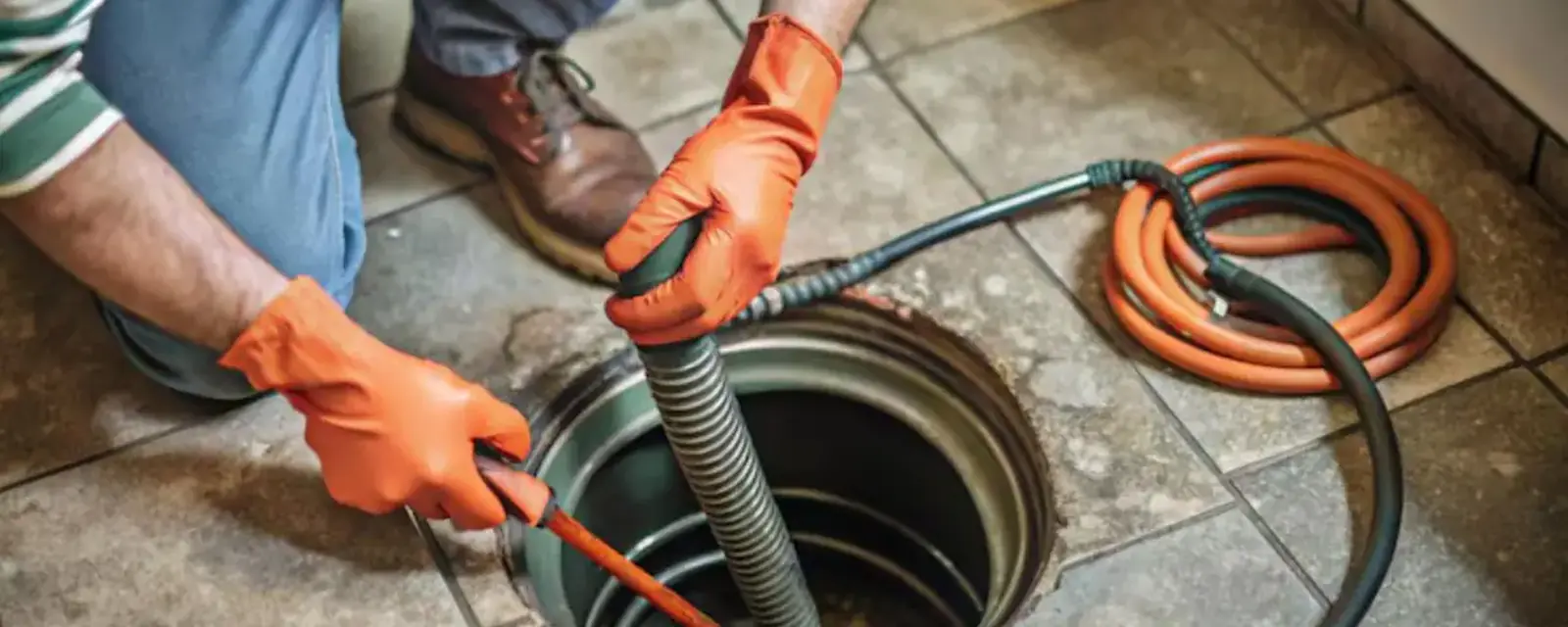
Shower water pooling while the washer drains is a different problem than one slow sink. If you need drain cleaning in Chesterfield, MO, the first question is how many fixtures are affected. Several backing up together point at the main line. Our 24/7 dispatch handles both. While you wait, stop running water and pull rugs away from the floor drain. Skip caustic cleaner, which sits in a stopped pipe and burns whoever opens it next.
This page is about fixture drains: sinks, tubs, showers, laundry standpipes, floor drains and the branch lines behind them. Blocked mains and laterals are covered on the sewer line cleaning page, since the machines and the responsibility are different.
When a clogged drain is an emergency
Most slow drains can wait for a morning appointment. A few cannot. Sewage rising in a floor drain or the lowest tub, water spreading toward a finished basement, or a house where nothing drains at all should be treated as an emergency. Wastewater carries bacteria, and every flush or load of laundry adds more to the floor.
Call the 24/7 line for these. We schedule same-day visits when the calendar allows and dispatch after hours for backups that cannot sit overnight. Tell the dispatcher which fixtures are affected, because that decides which machine goes on the truck. The same crew covers neighbors in Ballwin and nearby towns.
- 1Stop all water use, including the dishwasher, washer and toilet flushes.
- 2Move rugs, boxes and cardboard off the floor around the lowest drain.
- 3Keep children and pets out of any standing wastewater.
- 4If water is near outlets or the panel, stay out and shut power off only if the panel is dry and easy to reach.
- 5Take photos of the water line for your insurer before cleanup.
Fixture clog or main-line problem: what backs up first
The order in which drains misbehave tells you more than any single slow sink. Plumbers read the house like a map, starting from the lowest fixture and working up. Use this as a rough guide before you call.
| What you notice | Most likely location | Sensible next step |
|---|---|---|
| One bathroom sink drains slowly, everything else is normal | Trap or the short branch under that sink | Clean the trap, then cable the branch if it returns within days |
| Tub gurgles or burps when the toilet is flushed | Shared bathroom branch line | Cable the branch through the tub overflow or a cleanout |
| Washer drains and water shows up in the basement floor drain | Main line or lateral past the last branch | Stop water use and call, the main needs a larger machine |
| Toilets bubble and tubs fill slowly at the same time | Main line | Call the same day, a camera look may be needed after clearing |
| Laundry standpipe overflows, kitchen sink is fine | Lint and soap buildup in the laundry branch | Cable or jet the laundry line and fit a lint catcher |
| Clear water in one sink and a sewer smell from a floor drain | Dry trap or a partial blockage downstream | Pour water into the trap, and call if the smell or gurgle stays |
Gurgling is air being pulled through a trap because water cannot move past a blockage. One gurgling fixture is a local clue. Gurgling in several rooms is a main-line clue.
What you can safely try before the truck arrives
Some clogs are honest DIY jobs, and paying for a visit on a hair-filled tub is a waste. Others get worse when handled wrong. These steps are low risk for a single slow fixture.
- ✓Use a flat-bottom plungerSeal the overflow opening with a wet rag first, then plunge a tub or sink with steady strokes for about a minute.
- ✓Pull the stopper or strainerHair wraps around the stopper arm and collects just below it. A plastic barbed strip from a hardware store pulls most of it out.
- ✓Clean the P-trapPut a bucket under the curved pipe, loosen the slip nuts by hand and rinse the trap out. Tighten the nuts snugly, then run water and look for drips.
- ✓Flush with hot tap waterHot tap water helps with light soap and grease film. Boiling water can soften PVC joints and crack porcelain, so skip it.
- ✓Stop at the first sign of a bigger problemIf a second fixture starts gurgling or the water level climbs when you plunge, put the plunger down and call.
Drains backing up together?
Stop running water and call. One slow sink and a whole-house backup need different machines.
Why a kitchen sink drain clog keeps returning
Kitchen drains clog differently from bathroom drains. Cooking grease cools inside the pipe wall and traps coffee grounds, rice and food scraps against it. The line narrows a little each week until a double sink holds water after one load of dishes. Plunging may open a small channel, but the film stays behind.
A garbage disposal adds another stop. Ground food packs into the first bend below it, and the dishwasher hose often ties in right there. Dirty water left in the dishwasher tub usually means a clog at that junction. A cable run through the kitchen branch removes the pack and scrapes the walls. If the sink was clearing and slowing again every month, ask us about a hydro jetting pass, since hydro jetting scours grease that a cable only pokes through.
Prevention is dull but real. Wipe greasy pans with a paper towel before washing, bin the paper towel, and run hot water for 20 seconds after the dishes. Fibrous scraps such as celery strings and potato peels are poor disposal feed.
If the disposal itself hums, jams or leaks, that is a separate repair and has its own page for garbage disposal repair.
Snaking, jetting or a camera: which fits which clog
People call it all drain cleaning, but there are three different tools and each answers a different question. Picking the wrong one means paying twice.
Snake or cable first when
- One fixture is blocked and the others run normally
- The blockage is likely hair, a toy, a wipe or a soft plug close to the fixture
- You need the drain open tonight and a deeper look can wait
- A cleanout is within reach and the line is short
Jet or camera first when
- The same drain has been cabled before and clogged again within weeks
- A cable stops at the same spot or comes back with roots or heavy grease
- Several fixtures are involved and the main line is suspected
- You are buying or selling the house and want to know the pipe condition
A cable cuts a hole through a clog. Jetting washes the pipe wall clean, and a camera shows what the pipe actually looks like. If a cable keeps stopping short, a sewer camera inspection shows whether the line is cracked, offset or just coated, and that decides everything after.
How a drain visit goes from first look to open pipe
Map the symptoms
We ask which fixtures are slow, which gurgle, and what changed recently. This takes two minutes and often points to the branch before anyone opens a tool bag.
Find access
A cleanout, a removed toilet, a sink trap or a roof vent gives the machine a way in. A cleanout cap in the yard or basement is the best door.
Run the right machine
A hand cable suits a sink branch. A drum machine with a cutting head suits a larger drain. Either is run slowly so it does not snag and bend in a cracked pipe.
Test the flow
After clearing, we run water through the fixture and the neighbors on the same branch and watch for gurgling or slow drainage.
Explain what came out
Hair, grease, roots and scale each tell a different story. We say what we pulled and whether a repeat is likely, then give the price before any extra work.
Yard drains and storm drains around the house
Not every blocked drain is indoors. Chesterfield lots with buried downspout lines, patio catch basins or a low yard drain collect leaves, silt and mulch. After a heavy rain, standing water over a grate usually means the pipe beneath is partly full of debris. A garden hose and a short cable often clears it.
If the line stays full after the debris is gone, a section may be crushed, offset or full of roots, and cabling will not fix that. We would look inside with a camera rather than keep cleaning a pipe that cannot flow. Drains that connect to a street storm system or a neighbor's property raise ownership questions, so ask the City before assuming the whole run is yours.
A drain line leak is not a clog
Water stains on a ceiling under a bathroom, or a damp spot on a basement wall below a shower, can come from a leaking drain line rather than a supply pipe. Drain leaks usually show only when the fixture is used, which makes them easy to miss. A clogged line can also push water out through a loose joint.
The test is simple. Run only that fixture, watch the stain, and compare with the supply side. If drainage is normal and the stain still grows, the problem is a joint or crack, and it moves into pipe repair rather than cleaning.
What decides the cost of drain cleaning
Drain cleaning ranges from a quick cable run to a long machine job with a camera follow-up. We quote the price before the work starts so you can decide with the facts in front of you. These are the factors that move it.
Insurance note: homeowners policies commonly cover sudden accidental damage but treat slow clogs as maintenance. Water backup damage often needs a separate endorsement, so read your policy and call your insurer before cleanup if the floor is wet.
Want the real number for your job? Call the 24/7 line, describe the work, and hear a clear price before anything starts.
Who owns the line from the house to the street
The City of Chesterfield says the property owner is responsible for the lateral sewer service line. That matters when a cable run cannot clear the problem. The City's Residential Sanitary Sewer Lateral Repair Program can cover certain lateral repairs up to $15,000, but only after a licensed plumbing company or licensed drainlayer has cabled the line and it did not clear.
Routine cabling is not reimbursable, and the owner pays the cabling invoice and anything above the cap. The application costs a non-refundable $200 and goes in by mail or in person with the cabling invoice, last year's tax receipt showing the sewer lateral fee and a notarized hold-harmless agreement. Keep your invoice, and ask the City's Department of Public Works whether your repair qualifies. If the line proves broken, the next page is sewer line repair.
Questions about drain cleaning in Chesterfield
Yes. Our 24/7 line dispatches for sewage backups, overflowing floor drains and houses where nothing drains. Slower clogs are usually scheduled for the next available daytime slot.
Count the fixtures. One slow drain is a local clog, while a lowest-level drain that bubbles or fills when you run another fixture points at the main line.
Snaking is one method of drain cleaning. A cable cuts through a blockage, while jetting washes the pipe wall and a camera shows the pipe condition, so the right tool depends on what you find.
A cable opens a channel but leaves grease, scale or roots on the pipe wall. A repeat clog is the cue to jet the line or put a camera in it.
We would rather you did not. Chemicals sit in a stopped pipe, can damage older fittings and splash on the person who opens the trap or runs the machine.
Yes, a stuck grate and a leaf-filled yard drain are routine. Tell us the type of grate and whether it is bolted, so we bring the right tools.
No. Routine cabling is the owner's cost. The City's lateral repair program may cover certain repairs after cabling fails, so keep the invoice and ask the City's Department of Public Works.
Reference points for this page: The Uniform Plumbing Code (UPC) and the International Plumbing Code (IPC) are the model codes most U.S. jurisdictions adopt, and the local permitting authority decides which edition and amendments apply. Sewer lateral ownership and the repair program are described by the City of Chesterfield.