
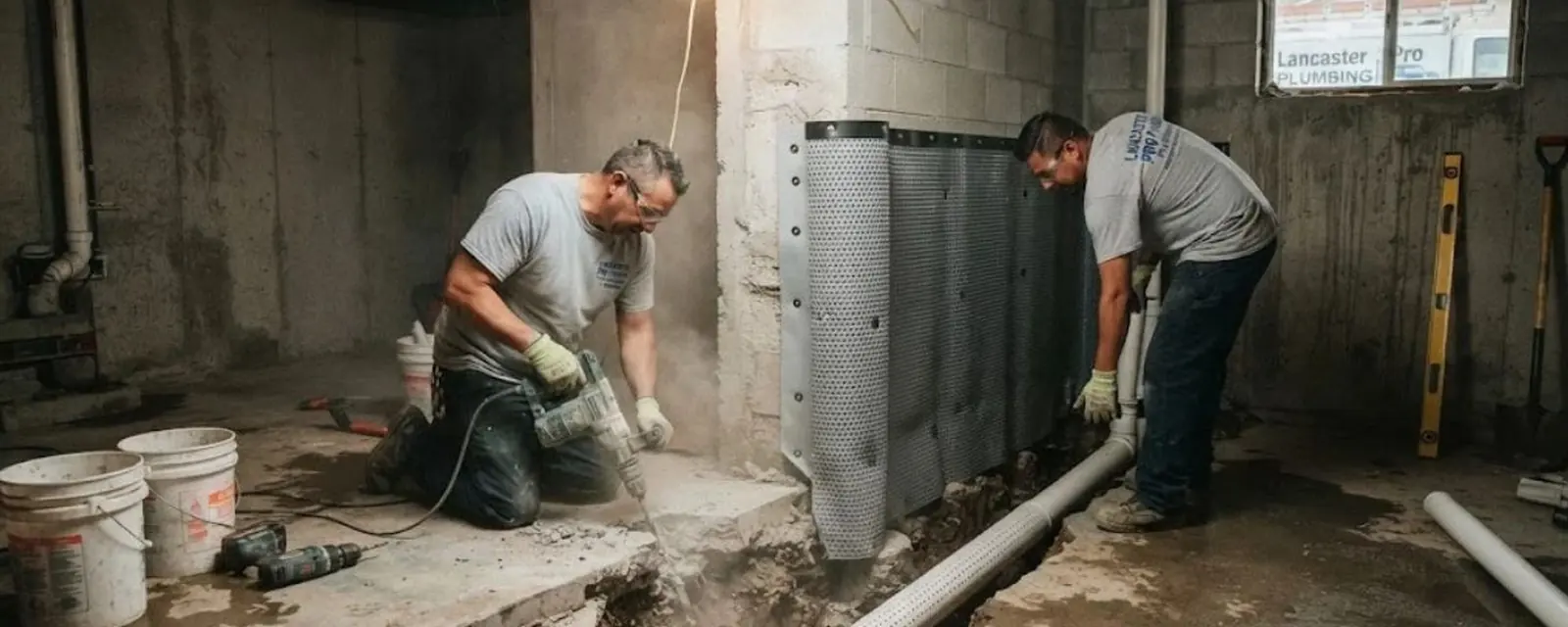
Do it yourself basement waterproofing works for some Chesterfield, MO homes and fails badly in others. Gutters, grading, a cracked window well and a bit of condensation are fair game for a homeowner. Water that rises through the slab, seeps along the floor edge after every storm or arrives with the sump pump running nonstop is a drainage problem. Paint-on sealers will not fix that.
This guide sorts the jobs into three groups. You will see what to try first, how to tell where the water really comes from and which signs mean the fix belongs below the floor.
Start with the cheap fixes outside the house
Most damp basements get worse because water is dumped next to the foundation. Check the outside before you buy a single bucket of sealer. A downspout that ends at the wall can push hundreds of gallons against one corner during a single thunderstorm.
Extend each downspout several feet away from the house, or tie it into a buried line that actually drains. Rake the soil so it slopes away from the wall, with the top of the soil sitting below the siding. Clear leaves from gutters and look for sagging sections that let water roll behind them.
These steps cost little and need no permit questions in most cases. Give them a few rain events before you judge the result.
What you see, what it usually means, and who fixes it
Use this to decide whether a weekend project makes sense. The cause matters more than the symptom.
| What you see | Likely cause | DIY or call |
|---|---|---|
| Damp wall that dries between storms | Downspout or grading dumping water at the wall | DIY: extend downspouts and fix the slope |
| Beads of water on cold pipes and walls in summer | Condensation from humid air | DIY: dehumidifier and insulation on cold water pipes |
| White crusty powder on block or concrete | Moisture passing through masonry, leaving mineral salts | Try a masonry sealer only after the outside water is fixed |
| Water at the floor and wall joint after heavy rain | Groundwater pressure under or beside the footing | Call: interior drain and sump are the usual answer |
| Standing water that returns after you pump it out | High water table or failed drainage | Call: basement waterproofing work below the slab |
| Water only near the floor drain or laundry area | Sewer backup, a drain problem or a supply leak | Call a plumber before treating it as groundwater |
A moisture meter and a cheap hygrometer will tell you more than your eyes can. Take readings on several days, not just one.
A simple test to find where the water comes from
Tape a foil square to the wall
Tape a square of aluminum foil tightly to a damp spot and seal every edge. Leave it for a day or two.
Read the foil
Water beads on the room side means humidity condensing from indoor air. Water behind the foil means moisture is coming through the wall.
Log the timing
Note whether the water appears during rain, a day after rain or only in humid weather. Same-day water points to surface runoff. Water that lags a day or two points to groundwater.
Rule out the plumbing
Turn off every fixture, then read the water meter and check again after an hour. A moving meter means a supply line is leaking and you do not have a waterproofing problem.
Check the sump pit
Lift the lid and watch how often the pump runs in dry weather. A pump that cycles with no rain tells you the water table is high or a line is feeding the pit.
Water still showing after the DIY steps?
Persistent seepage usually points to drainage a coating cannot fix.
Where DIY stops: sealers versus drainage
Hardware store coatings are sold as waterproofing, but they only block moisture that passes slowly through masonry. They cannot hold back water pushing from the other side.
Reasonable DIY projects
- Extending downspouts and clearing gutters
- Regrading soil and refilling settled spots
- Sealing small cracks in a window well
- Caulking where pipes or wires pass through the wall
- Running a dehumidifier and insulating cold pipes
- Testing an existing sump pump and checking its discharge line
Jobs that belong to a pro
- Cutting the slab to add an interior drain channel
- Setting a new sump pit and pump
- Digging out a foundation wall to coat and drain it
- Chasing a leak that keeps the meter moving
- Anything involving a failed sewer or drain line
- Repeated water despite fixed gutters and grading
Why paint-on sealers fail on the wrong problem
A sealer is a skin. When water pressure builds behind a block wall, the skin blisters and peels, often within a season. You then have a damaged wall surface and the same wet floor.
Sealer does have a place. If the outside drainage is corrected and the wall only wicks a little moisture, a masonry waterproofer can cut down on dampness and white powder. Apply it to clean, bare masonry and follow the product label on moisture and temperature.
If you find yourself coating the same wall twice, stop. The money is better spent finding the water path.
What Chesterfield homeowners should know about the Valley and the creeks
Chesterfield Valley is low-lying Missouri River floodplain, and Caulks Creek and Bonhomme Creek both run into the river inside the city. In the Great Flood of 1993 the Monarch levee gave way on the night of July 30, and about 4,000 acres of the Valley took 6 to 15 feet of water. The Valley is now protected by the Monarch-Chesterfield Levee.
The practical point is that ground in and near the floodplain can hold more water for longer, so a basement there may need a pump and drain system instead of surface fixes alone. Homes up on the ridges drain differently. Permit rules vary, so ask the City or St. Louis County before changing drainage, or before any plumbing work that may need a permit.
Source types: Wikipedia summary of city data, St. Louis Public Radio.
Before you spend money on any waterproofing product
- ✓Confirm the downspouts discharge at least several feet from the foundation.
- ✓Photograph the wet area and note the date and the weather.
- ✓Run the foil test on two or three spots.
- ✓Check that the sump pump lifts water out and the discharge line is not frozen, kinked or draining back.
- ✓Look for plumbing leaks with the meter test.
- ✓Move stored items off the floor and onto shelves.
What drives the cost when it is a professional job
Basement drainage work varies a lot from house to house. A plumber looks at the cause before naming a price.
Homeowners policies commonly cover sudden accidental water damage but often exclude seepage and flood. Read your policy or ask your agent before assuming either way.
Want the real number for your job? Call the 24/7 line, describe the work, and hear a clear price before anything starts.
If you need a pro for the pump side
A drain does nothing without a place to send the water. If your pit is old or undersized, see how sump pump installation and repair fits into the plan. Pair that with a look at the rest of the system through basement waterproofing if the cause points below the slab.
We also serve nearby towns, including homes in Ballwin and Wildwood. Call the 24/7 line if water is actively rising, and shut off electricity to wet areas only if the panel is dry and you can reach it safely.
Questions readers ask
You can control surface water, condensation and small cracks yourself. Groundwater that pushes through the floor or wall needs drainage and a pump, which is a professional job.
It helps with minor dampness once outside drainage is fixed. It will not stop water pressure, and the coating usually peels if water keeps pushing from the other side.
Tape foil to the wall for a day. Droplets on the outside of the foil mean humidity. Moisture behind the foil means water is passing through the wall.
Many homeowners policies cover sudden accidental discharge from plumbing but exclude seepage and flood. Check your policy and ask your agent.
The Valley is low-lying Missouri River floodplain behind the Monarch-Chesterfield Levee. Ground there can stay wetter, so pump capacity and backup power matter more than they do on higher ground.
Reference points for this guide: The Uniform Plumbing Code (UPC) and the International Plumbing Code (IPC) are the model codes most U.S. jurisdictions adopt, and the local permitting authority decides which edition and amendments apply. This guide is general information and does not replace a visit.