
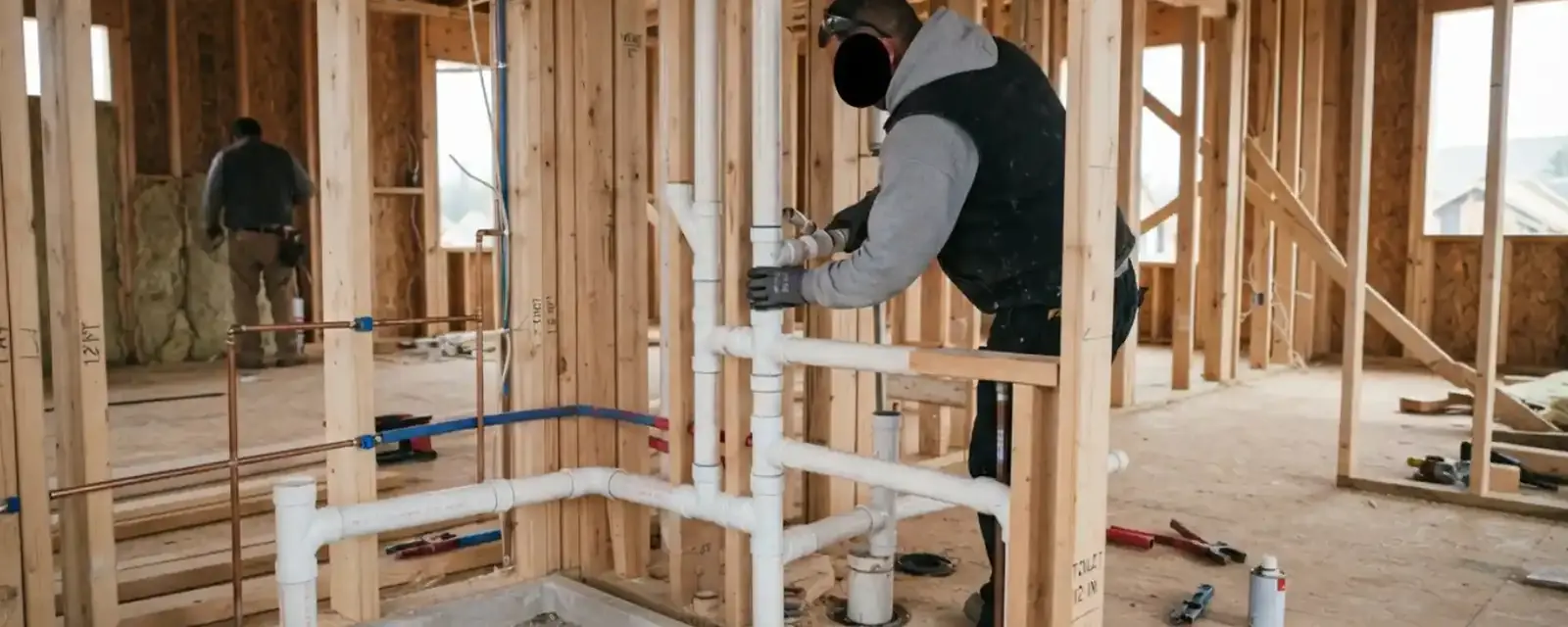
Plumbing installation in Chesterfield, MO covers a lot of ground, from a new kitchen sink to the drain and supply lines for a bathroom that did not exist last year. The right plan depends less on the fixture than on what is behind the wall. Where is the nearest drain, and how far is the supply?
We start by walking the space with you, then trace the supply and drain paths and tell you what the job will take before any pipe is cut.
Why the drain decides the plan
Supply pipe is flexible and forgiving. A drain is not. Waste lines depend on slope, usually a quarter inch of drop per foot, and every fixture needs a vent so the trap does not siphon dry. That is why a sink on the opposite wall from the existing stack can cost more than the sink itself.
On a remodel, the first question is where the existing drain and vent can be reached. In a basement with exposed joists this is simple. On a slab or under a finished floor, a drain connection may mean cutting concrete or running a lift station, and we tell you that before you buy the fixture.
New construction is easier because pipes go in before the walls close. Rough-in, a pressure test and inspection come first, then finish trim once drywall is up.
Common installation jobs and what each involves
| Job | What it needs | Main thing to plan |
|---|---|---|
| Kitchen or bath sink | Supply stops, drain and trap, vent connection | Distance from the existing drain and vent |
| Added bathroom | Supply, drain, vent and often a new circuit for a fan | Stack location and slope for the toilet drain |
| Laundry hookup | Hot and cold supply, a standpipe and a floor or wall drain | Drain size and whether the trap sits at the right height |
| Basement bathroom | Drain below the main line may need a sewage ejector | Whether gravity can carry waste to the sewer |
| Outdoor hose bib | Frost-free spigot through an exterior wall | Shutoff location and winter drainage |
| Water softener or filter | Bypass valve, drain and an outlet | Space and floor drain access |
Moving a toilet or adding fixtures far from existing lines changes the price more than the fixture does.
Adding a bathroom or a laundry hookup
These two projects raise the same early questions.
Where does the waste go
A full bath usually needs a 3 inch drain and a vent. If the house drain is below the new fixtures, an ejector pit and pump may be needed.
Can the supply keep up
A new bathroom adds demand. We check that the supply line and water heater can handle another shower at the same time.
Where are the shutoffs
A laundry hookup needs accessible stops, and the washer box should be installed so hoses are easy to close.
Does it need a permit
Added fixtures and moved lines often trigger review, so check before starting.
Adding a bath, a sink or a laundry?
New fixtures need supply, drain and vent plans before any wall is opened.
PEX supply lines against copper
For new supply runs, PEX is common in remodels, and copper is still used in some jobs.
PEX installation
- Flexible, so fewer fittings in tight walls
- Quicker to run through joists
- Cannot be used outdoors in sunlight
- Needs a manifold or tees planned in advance
Copper installation
- Rigid and neat when exposed
- Suits visible runs and some heat-exposed spots
- More time to solder or press-fit
- Material costs usually run higher
Gas smell or suspected gas leak: leave first
If you smell gas, the rotten egg odor added to natural gas, leave the building right away. Do not flip switches, use a phone inside, light anything or try to find the source. Call the gas utility or 911 from outside.
Gas line inspection and installation is regulated work with its own rules and testing, and this site has no separate gas page. We can talk through gas appliance connections and what a pressure test involves, but a suspected leak is a utility and fire department call before it is ever a plumbing call.
- ✓Leave the house with everyone, including pets, and leave doors as they are.
- ✓From outside or a neighbor's home, call the gas utility or 911.
- ✓Do not return until the utility or fire department says it is clear.
- ✓After the all-clear, a licensed plumber can inspect piping and appliance connections.
How an installation job runs
Walk and measure
We look at the space, find the nearest drain, vent and supply, and note any wall, joist or slab that complicates the run.
Review the plan and price
You get a plain explanation of the route, the materials and the price before work starts.
Permit check
We help you find out whether the City or St. Louis County needs to review the job.
Rough-in
Supply, drain and vent are run, and the system is pressure tested before anything is hidden behind a wall.
Finish and test
Fixtures are set, connections are checked for drips and drains are run to confirm flow.
What decides the price of an installation
Installing a sink is not the same as adding a bathroom. These factors move the number.
Insurance rarely pays for planned improvements, though it may cover sudden damage from a fixture that fails later. Check your policy.
Want the real number for your job? Call the 24/7 line, describe the work, and hear a clear price before anything starts.
Permits and licensing in Chesterfield
The City of Chesterfield contracts with St. Louis County for permitting and inspection, and the City's Department of Planning handles zoning approval. Permit rules vary, so ask the City or St. Louis County before work that may need a permit. Missouri sets plumber licensing locally, so confirm any plumber's licence with the building department where the job is.
Before you buy fixtures
- ✓Measure the rough-in distance for a toilet and check the sink cutout size.
- ✓Confirm where your water heater, main shutoff and cleanouts are.
- ✓Decide whether you want PEX or copper supply and check what already runs through the house.
- ✓Take photos of the wall or floor where the work will happen.
- ✓Keep boxes and spec sheets until the job passes.
Related work and nearby towns
Many installations lead to other work. A new tank-style unit is covered in water heater installation, and failing supply lines are covered under repiping. We also take installation jobs in Town and Country and surrounding towns.
Questions about plumbing installation in Chesterfield
Our 24/7 line is staffed for urgent plumbing problems. Planned installations are normally scheduled in daytime visits, and same-day appointments are available when we have openings.
Often yes, but the drain must be able to reach the sewer by gravity. If it cannot, a sewage ejector pit may be needed, and we explain that up front.
Permit rules vary, so ask the City of Chesterfield or St. Louis County before work that may need a permit.
Yes. PEX suits many remodel runs, and we explain whether it fits your walls, your existing pipe and your plan.
No. Leave the building and call the gas utility or 911 first. Once it is cleared, we can inspect the plumbing side.
Yes, if it fits your rough-in. Share the model so we can confirm the supply and drain requirements before the visit.
Reference points for this page: The Uniform Plumbing Code (UPC) and the International Plumbing Code (IPC) are the model codes most U.S. jurisdictions adopt, and the local permitting authority decides which edition and amendments apply.